.avif)





The Best Conversion Rate Optimization Tools in 2026
This guide cuts through the noise. We looked at the tools growth teams actually use, what they're good at, where they fall short, and what they cost.
What to Look For in a CRO Tool
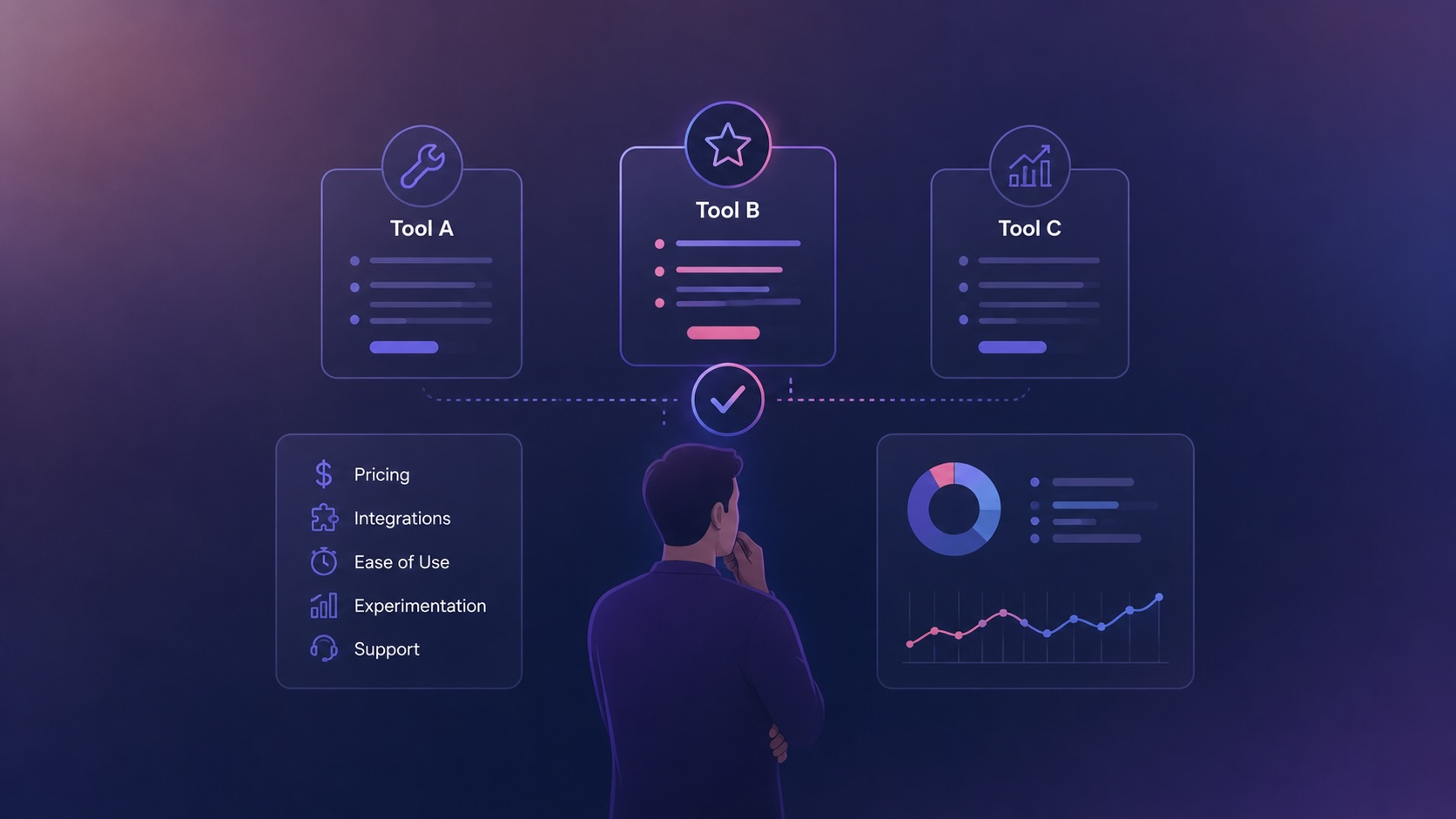
Before diving into the list, here's the framework we used to evaluate each tool:
The Tools
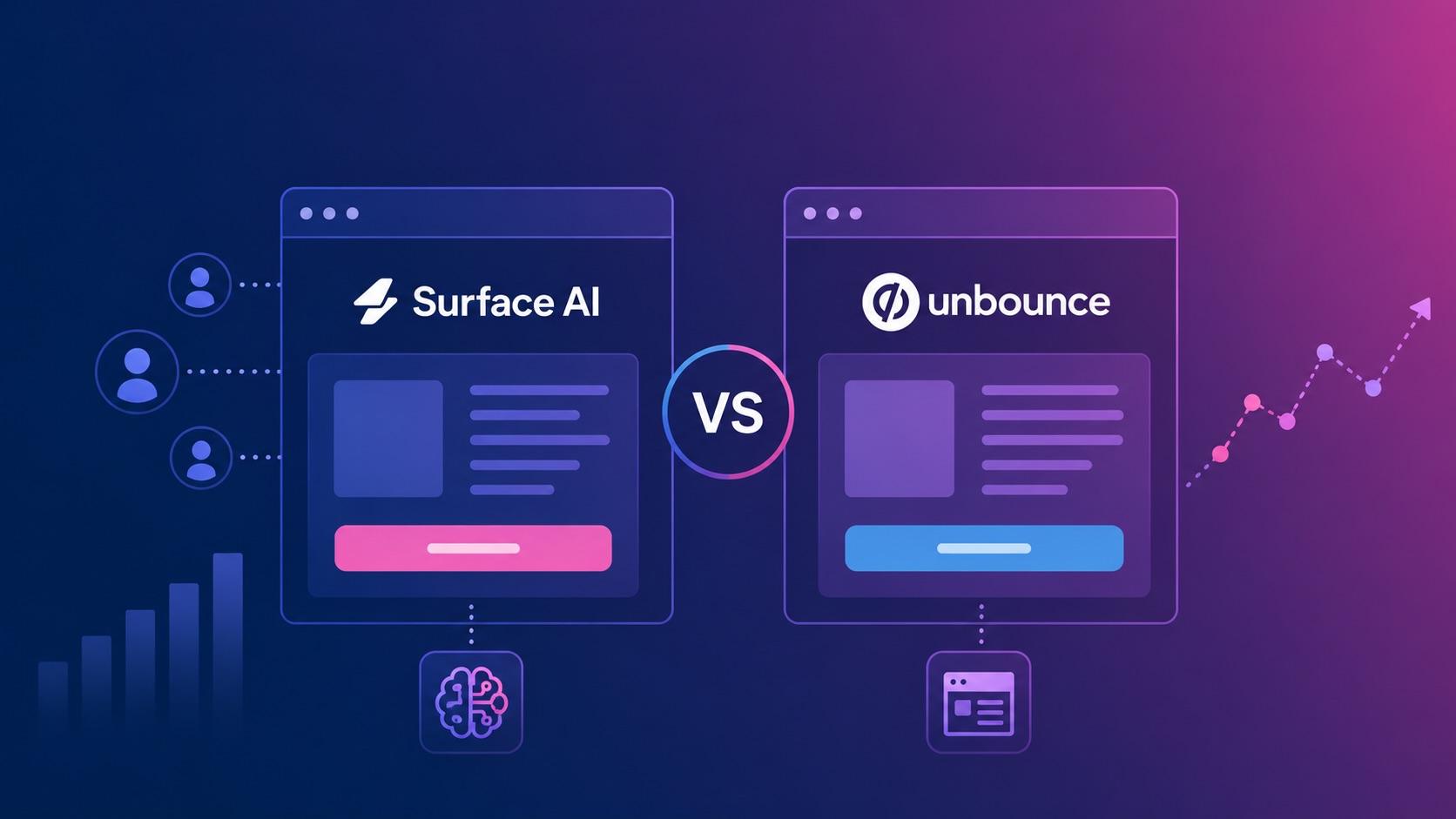
1. Surface AI
Best for: Lean growth teams that want to move fast without engineering dependencies
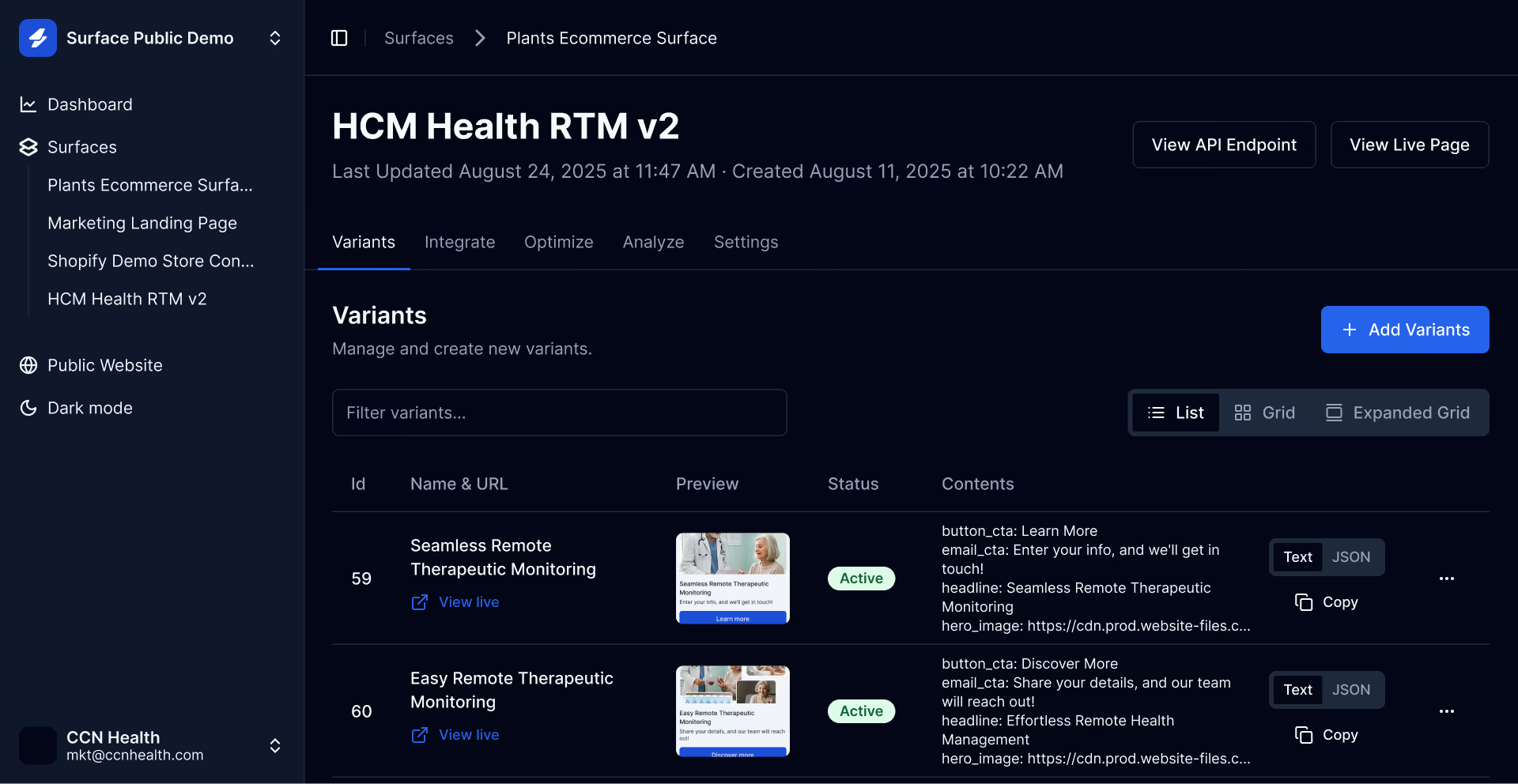
Surface AI is built around a core frustration shared by growth teams everywhere: by the time a test gets scoped, designed, built, and QA'd, the moment has passed. Surface AI removes that bottleneck with AI-led variant creation: you describe what you want to test, and the platform generates variations automatically.
Where most tools require you to design and build every test variant manually, Surface AI has the option to generate them for you, using a wide variety of messaging strategies. Combined with multivariate bandit testing (which reaches conclusions significantly faster than traditional A/B splits), teams can run more tests, faster, without adding headcount or burning engineering cycles.
2. Optimizely
Best for: Enterprise teams with large budgets and complex experimentation needs
Optimizely is the category leader for enterprise experimentation. It supports A/B testing, multivariate testing, feature flagging, and personalization at scale across web, mobile, and server-side. If you're running hundreds of experiments a year and need sophisticated segmentation, statistical controls, and compliance features, Optimizely is the benchmark.
The tradeoff is everything else. Optimizely requires dedicated implementation resources, often involves multi-month onboarding, and pricing starts around $36,000/year—with enterprise contracts commonly reaching $200,000–$500,000/year. There's no self-serve option.
3. VWO (Visual Website Optimizer)
Best for: Mid-market teams that want a full CRO suite
VWO offers one of the most comprehensive feature sets in the mid-market: A/B testing, multivariate testing, heatmaps, session recordings, surveys, and funnel analysis. It's a legitimate all-in-one CRO platform that many growth teams use as their primary tool.
The visual editor is genuinely good: you can build test variations without code for most common use cases. Where it gets complicated is pricing: VWO uses a modular model where each capability is priced separately, and costs stack quickly. A meaningful deployment typically runs $15,000–$50,000/year.
4. AB Tasty
Best for: Teams that want experimentation plus personalization in one platform
AB Tasty sits in similar territory to VWO but leans more heavily into personalization and audience segmentation. Beyond standard A/B testing, it offers feature management, progressive rollouts, and AI-driven personalization—making it appealing for teams that want to move from 'test and pick a winner' to 'continuously adapt the experience by audience.'
Setup is more accessible than Optimizely, though still requires technical implementation. Pricing is enterprise-oriented and not publicly listed.
5. Shoplift
Best for: Shopify brands that want the fastest path to running tests
If you're on Shopify, Shoplift is worth a serious look. It integrates natively with the Shopify Theme Customizer, meaning you can build test variations directly inside the same interface you use to manage your store—no separate tools, no developer involvement, no page flicker.
The standout feature is Lift Assist, which automatically generates branded test variations based on your store's existing design. Proven results include a 72% increase in add-to-cart rates for Cobra Puma Golf and price testing that gave SAXX confidence to raise prices company-wide.
Head-to-Head: How the Tools Compare
Which Tool Is Right for You?
You're an early-stage or growth-stage team trying to move fast without burning engineering cycles: start with Surface AI. AI-led variant creation removes the biggest bottleneck most growth teams face, and the free tier lets you validate before committing.
You're a Shopify brand and want to test directly inside your existing workflow: Shoplift is purpose-built for this and has the case studies to back it up.
You need a full CRO suite with heatmaps, recordings, and surveys alongside testing: VWO is the most balanced option at mid-market scale.
You want experimentation plus personalization and have budget for a platform approach: AB Tasty is worth evaluating.
You're running 200+ experiments a year with a dedicated experimentation team and enterprise budget: Optimizely is the standard, but go in with eyes open on cost and complexity.
The Honest Truth About CRO Tools
The best CRO tool is the one your team actually uses. A sophisticated enterprise platform that takes three months to implement and requires engineering to build every variant will be outpaced by a simpler tool that your growth team can operate independently.
The trend in the category is clear: the friction between 'we have a hypothesis' and 'test is live' is shrinking. AI-assisted variant creation, adaptive algorithms that reach significance faster, and no-code editors have made it possible for growth teams to run more tests with fewer dependencies than at any point in the history of the category.
Whatever you choose, the goal is the same: more tests, faster learning, better decisions.